Arizona's Tallest Tower Is Coming to Downtown Phoenix. Here's What Buyers Should Know.
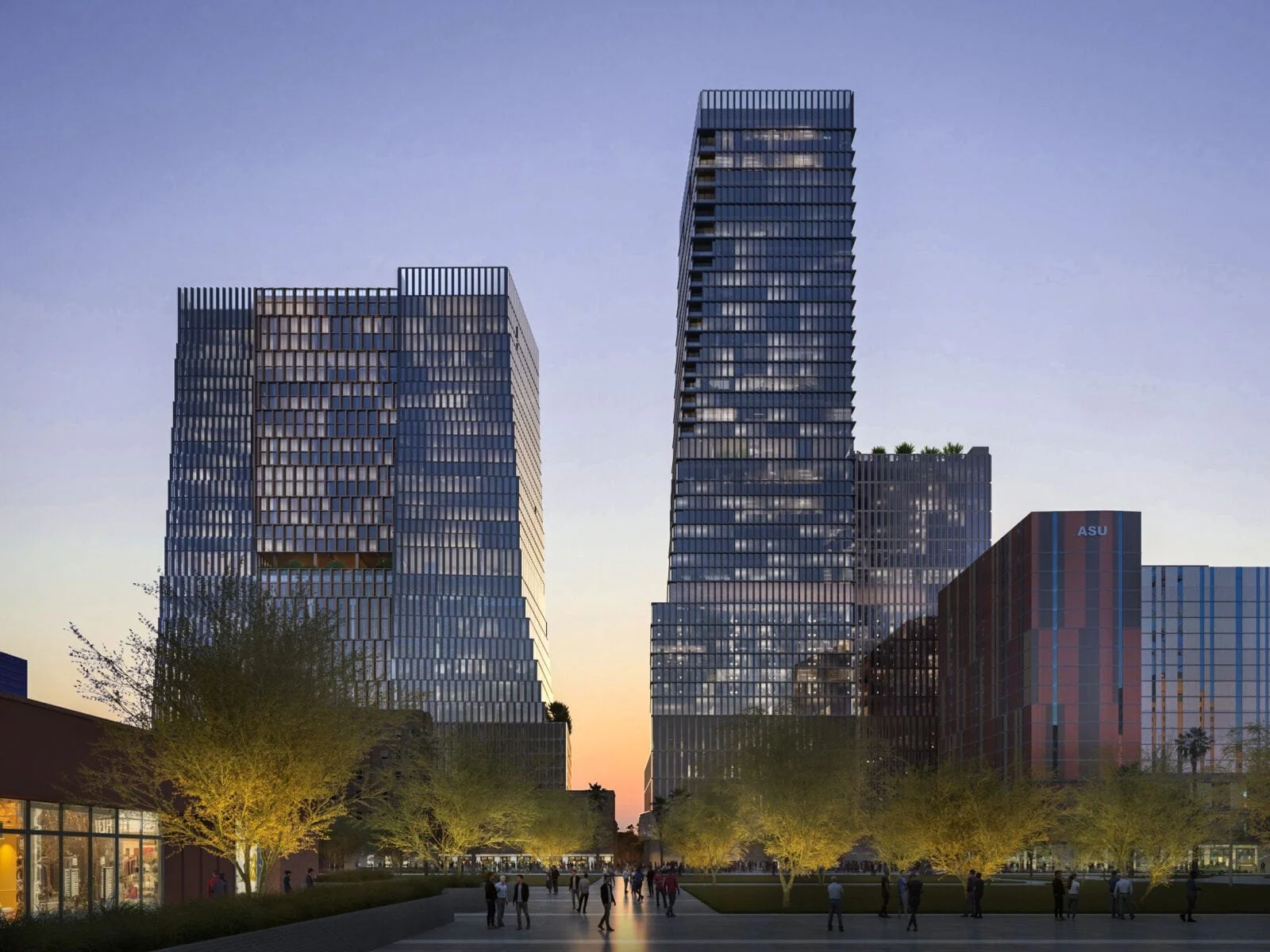
Arizona's tallest building is headed for Downtown Phoenix — and it's only one piece of a construction wave that's going to reshape what living downtown means over the next five years.
The project is called Arro. Roughly 1.8 million square feet across two towers: a 541-foot north tower that will be the tallest building in the state, and a 425-foot south tower beside it. The plan mixes luxury residential, hospitality, office, and retail in one development. It's expected to be permit-ready by the end of 2026, with about a three-year build after that.
That's a long runway. But Arro is far from the only thing going up.
What Else Is Coming
Downtown Phoenix Pipeline
Arro — 1.8M sq ft, twin towers, 541 ft and 425 ft; permit-ready target end of 2026
Ray Phoenix — 401 units in a 26-story tower, slated for completion in 2026
Denū Hotel and Spa — 17 stories, 236 rooms, desert-inspired interiors and a full spa
The Moreland — 237 units of affordable housing; Phase I construction running through December 2027
Behind all of it sits the city's 10-year downtown development plan, which is less glamorous than a record-setting tower but arguably more important for property values. The goals are practical: wider streetscapes for pedestrians, pocket parks, a bigger tree canopy for shade, a dedicated entertainment district, and high-density housing and hotels.
Shade and walkability aren't amenities in Phoenix. They're the difference between a neighborhood people visit and a neighborhood people live in.
Why This Matters for Buyers Right Now
Here's the practical takeaway. Large-scale development like this tends to lift the surrounding blocks well before the ribbon gets cut — often at the point when permits and financing become public and certain.
Which means the window that matters isn't three years from now when Arro tops out. It's the next 12 to 24 months, while the projects are visible on paper but not yet vertical.
The neighborhoods worth watching are the ones adjacent to the investment, not inside it: Roosevelt Row, the Garfield and Evans Churchill areas, and the historic districts within walking distance of the light rail. Those blocks still have entry points that downtown proper doesn't.
A Word of Caution
I'd be doing you a disservice if I only gave you the upside. Announced projects are not built projects. Timelines slip, financing changes, and a permit-ready date is not a groundbreaking. I've watched more than one Valley development get announced with fanfare and quietly shelved.
So buy the neighborhood, not the rendering. If a block only makes sense to you because of a tower that hasn't broken ground yet, that's speculation — and speculation is a fine strategy as long as you know that's what you're doing.
The Case for Phoenix
Setting the towers aside entirely, Phoenix remains the Valley's best value proposition. Median prices here sit dramatically below Scottsdale and Paradise Valley, while offering big-city amenities, four professional sports teams, and neighborhoods like Arcadia and the Biltmore corridor that hold their character.
For first-time buyers and investors, that gap is the whole opportunity. The development pipeline is simply a reason to look sooner rather than later.